| 1. A superb Model 1840 United States Medical Staff sword, signed on both the scabbard just below the throat within a scroll and blade at the ricasso by the military outfitter William H. Horstmann & Sons, Philadelphia. The workmanship and heft of this sword far exceed what are typically seen. The mercury gilding finish to the brass is lustrous. The castings of the hilt and scabbard fixtures are detailed and sharp. Silver Old English M.S. letters are applied to the front langet. The blade etchings are deep, not the frosted type, and embellished. One side of the blade presents the full United States Medical Staff, while lesser swords will have only Medical Staff or simply M.S. The opposite face features a military panoply and a displaying eagle with ribbon motto E Pluribus Unum. The blade decorations include four poppy flowers and leaves. These symbolize the relief of pain. Here is a high quality mid 19th century American army surgeon's sword that is a remarkable survivor. $8,500 |
|
| 2. An important plaster antique phrenology bust with paper label signed in ink by the noted phrenologist Frederick E. Bridges (c. 1810-c. 1880), Liverpool, and dated by him May 24th 1865. A publication by Bridges, found in the Wellcome Library, London, illustrates the bust (on the left, third down). While Bridges is well-known for his phrenology inkwells, no other Bridges large phrenology bust is recorded. To have an example of a newly identified type of antique phrenology head, let alone one autographed by a leading 19th century phrenologist, is a rare event. 12.5" tall. $4,250 |
|
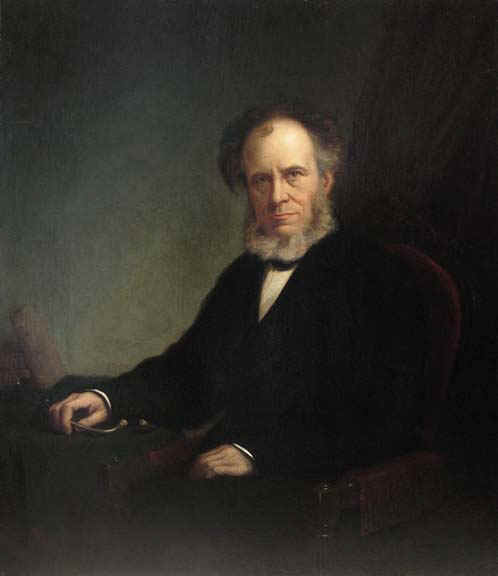
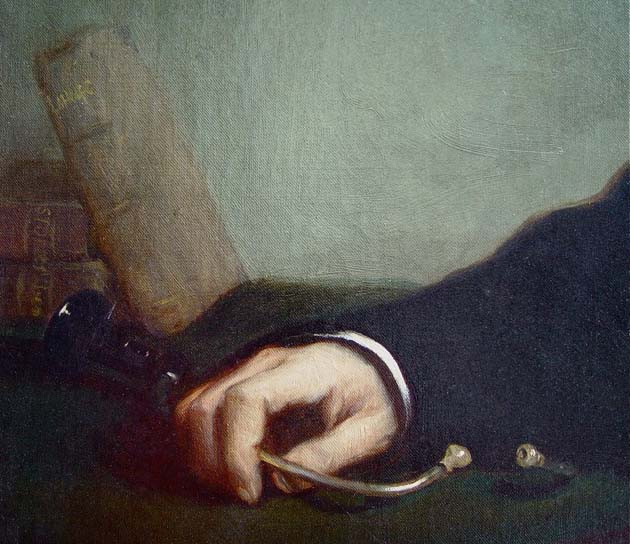
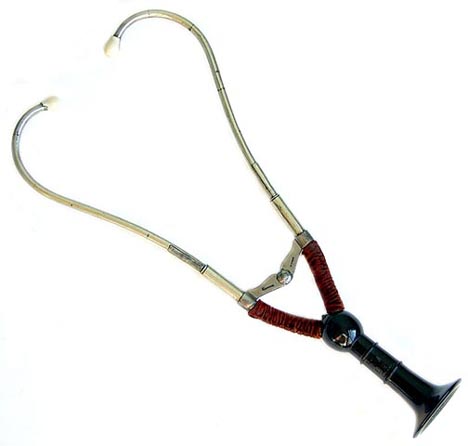
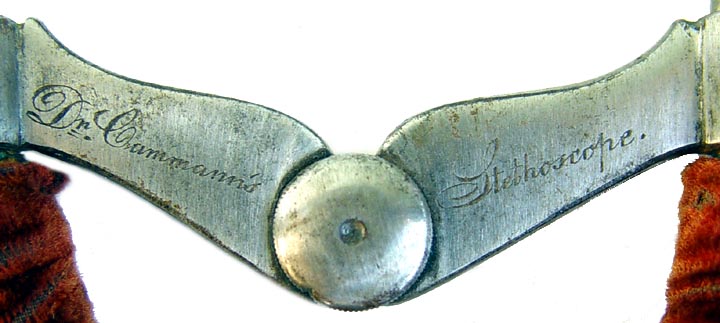
| 3. A c. 1860 oil on canvas portrait d'apparat of Dr. George P. Cammann (1804-1863), a prominent New York City physician and the inventor of the first practical and commercially viable binaural stethoscope. An eponymous Dr. Cammann's Stethoscope is shown in the right hand of Dr. Cammann. The stethoscope depicted in the painting is Cammann's initial model of the 1850s. The books on the table are titled: LAENNEC; STOKES; and ALLISON...all giants in the fields of auscultation and stethoscopy. The Memoir of George P. Cammann, M.D., may be read online. This remarkable painting is attributed to the artist Thomas Hicks (1823-1890), one of New York City's leading portrait painters and a member of the National Academy of Design. Abraham Lincoln (twice), Charles Dickens, Oliver Wendell Holmes, Edwin Booth, and Harriet Beecher Stowe are a few of the luminaries who posed for the masterful portrait painter Thomas Hicks. Ex New York Academy of Medicine. SOLD |
|
|
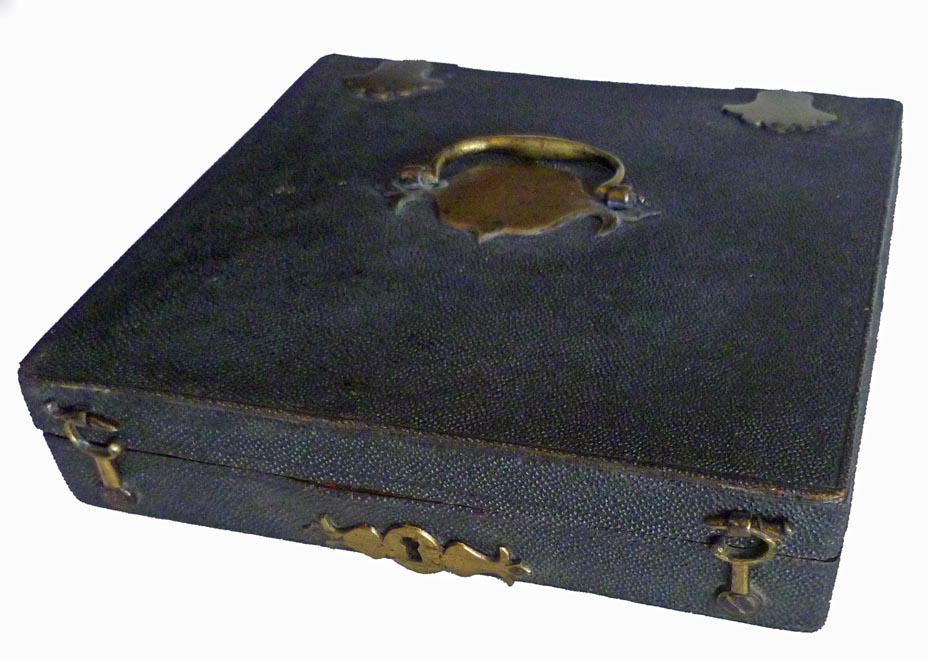
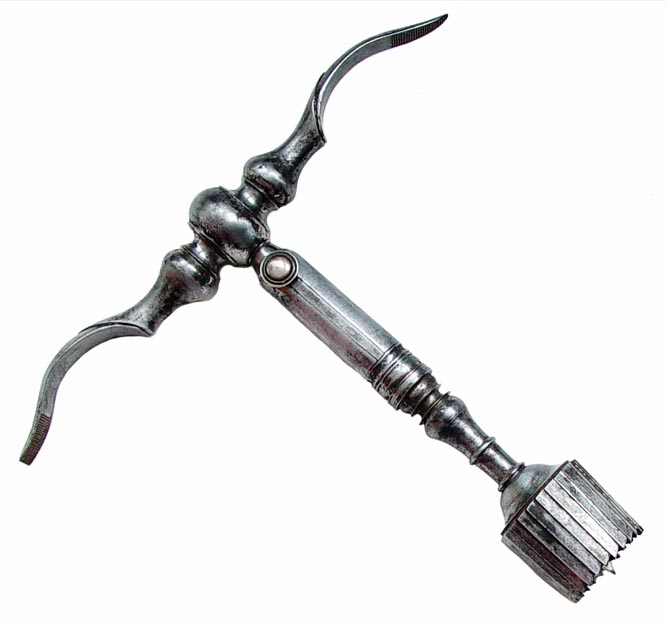
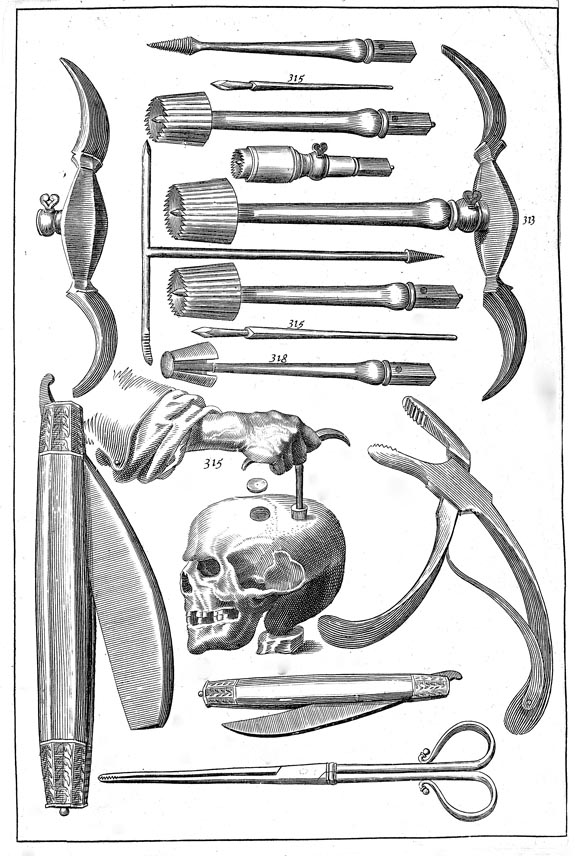
4. An English c. 1730 antique trephine set with fine gull wing trephine. The distinctive shape of the trephine's handle was known at least as early as John Woodall's The Surgeon's Mate, published in 1639, where it is illustrated. The bone disk forceps elevator is that of Dr. Samuel Sharp (1709-1778), FRS, who was an accomplished surgeon at Guy's Hospital, London. This rare antique neurosurgical kit is thought to have been made by the surgical instrument maker Edward Stanton, At the Saw and Crown, in Lombard Street, London, who was active in the 1730s-40s. $8,500
|
|
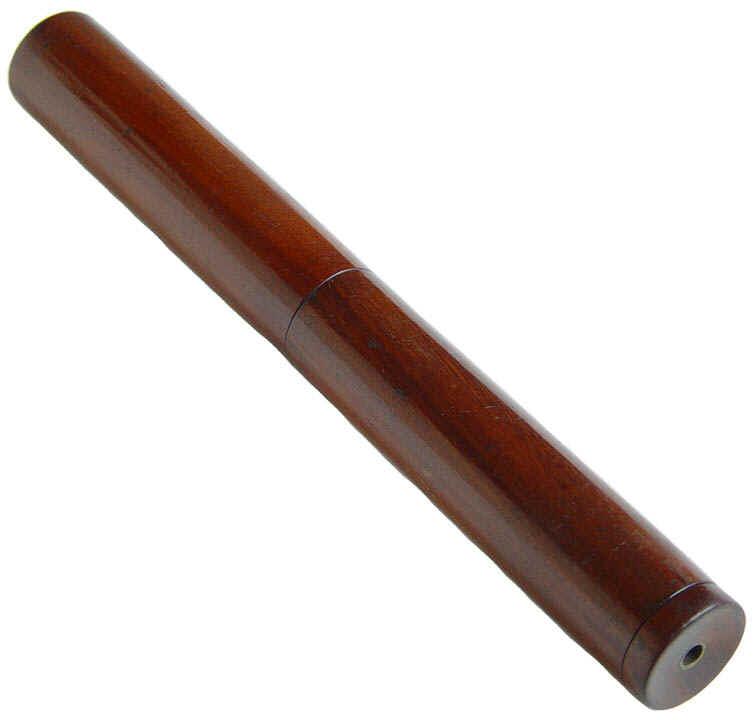
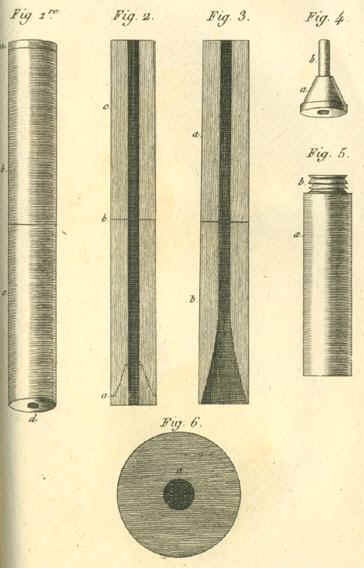
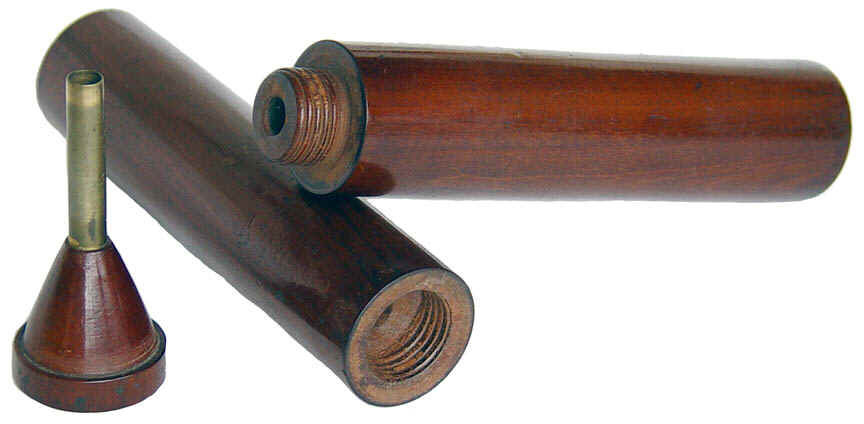
| 5. An important c. 1819 first model antique Laennec monaural stethoscope that is ~32 cm / ~12.5" long. The tube was turned from a single piece of wood and the threads work perfectly. The plug fits both fully and snugly into the throat of the female-threaded section. This iconic Laennec stethoscope is by all measures a remarkable example. SOLD |
|
| 6. An exceedingly fine and rare c. 1800 signed Spode neoclassical leeches jar. $15,000 |
|
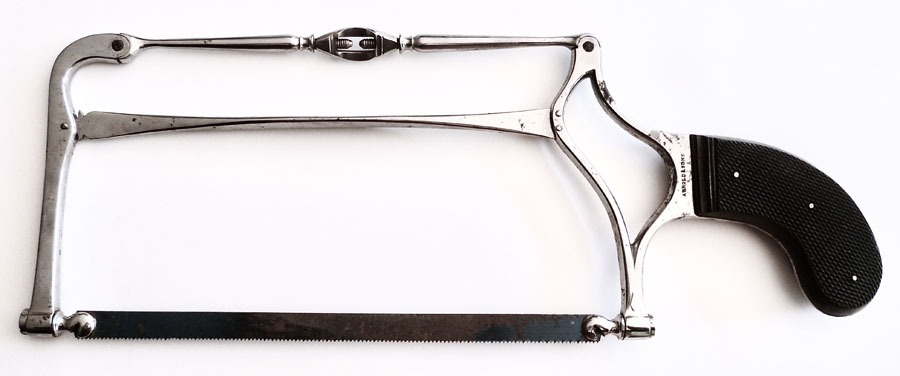
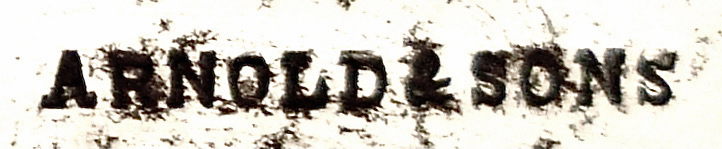
7. An antique Dr. Butcher's amputation and excision saw by Arnold & Sons, London. An unusual feature of the antique Butcher's amputation saw, aside from the name, is a blade that can be rotated to cut at any angle and beneath a flap. Dr. Richard George Herbert Butcher (1816-1891), a Dublin surgeon of note, invented the instrument in 1851. This is one of the more interesting and attractive nineteenth century surgical saws. See Weiss 1863, pl. III, fig. 8. $750
|
|
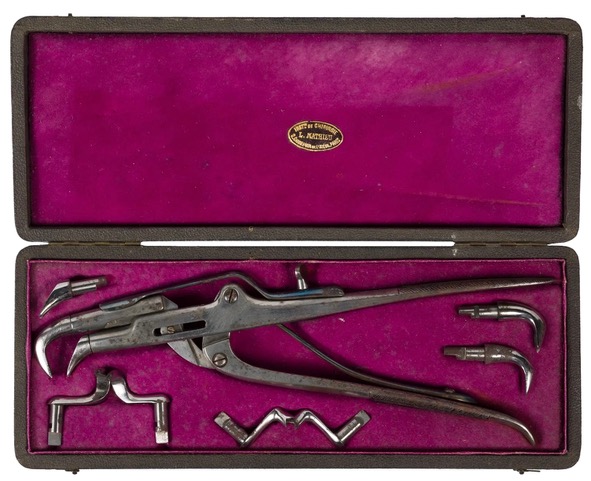
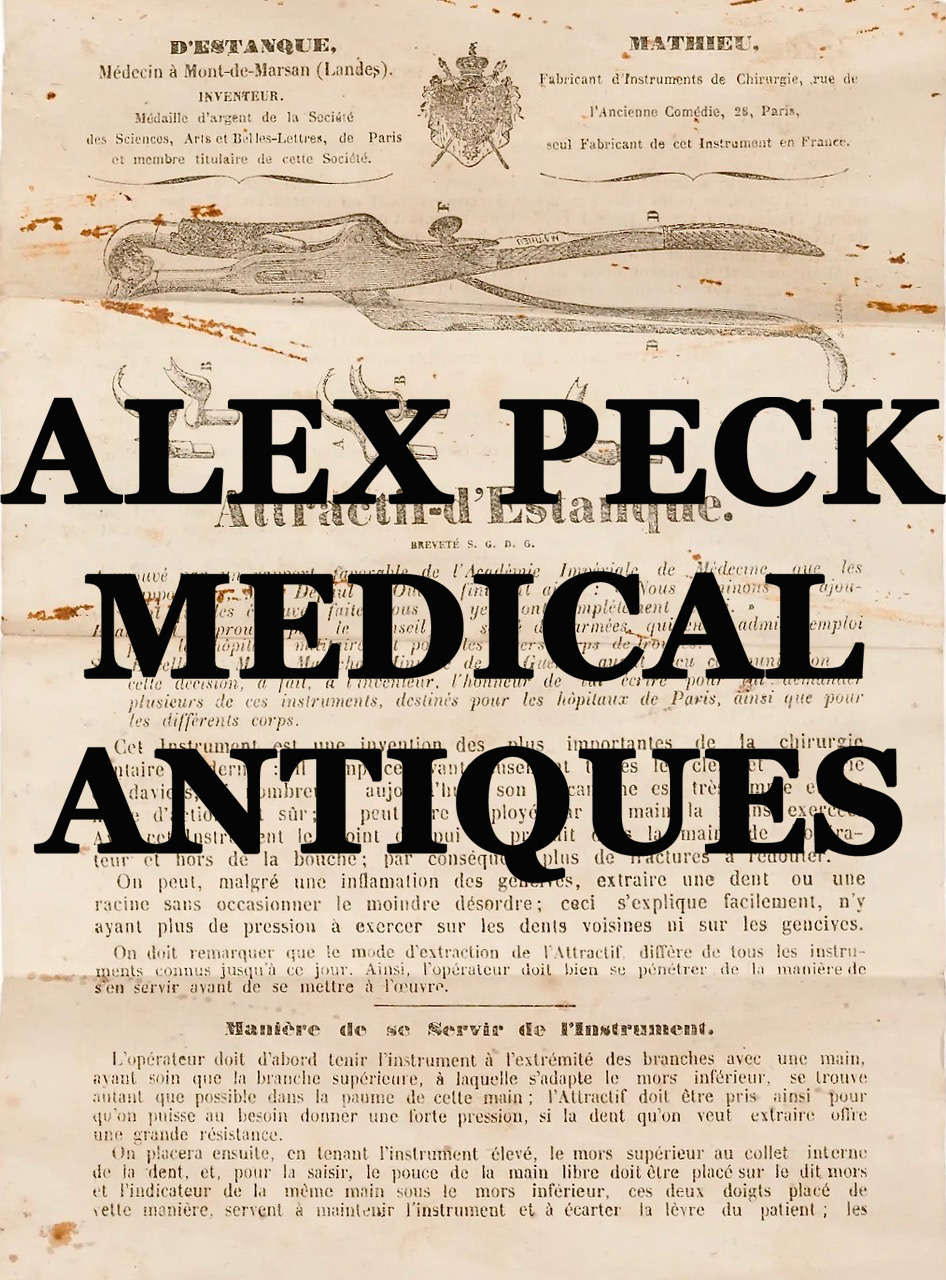
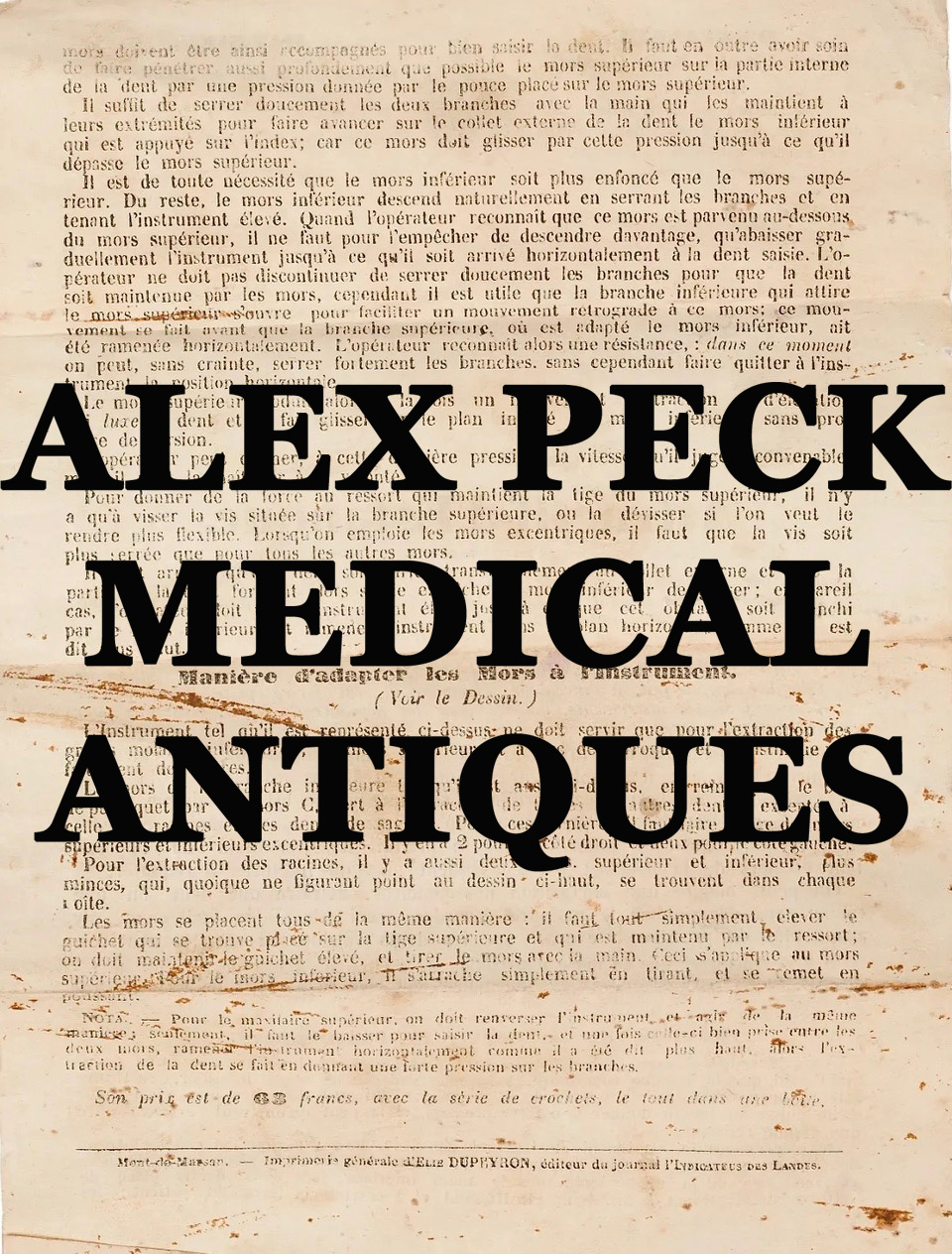
| 8. An important c. 1860s antique dental extractor stamped on handles ATTRACTIF / D ESTANQUE and MATHIEU / A PARIS. The rare complete set is contained in its fitted-case and has all 9 of its interchangeable jaws. Even the original Mathieu printed sheet of description and instructions is included. This is the most complicated mechanical tooth forceps shown in Bennion. See Bennion, Dental Antiques, p. 38 and 63, fig. 65. $6,500 |
|